What Does Full Coverage Actually Mean?
November 16, 2026
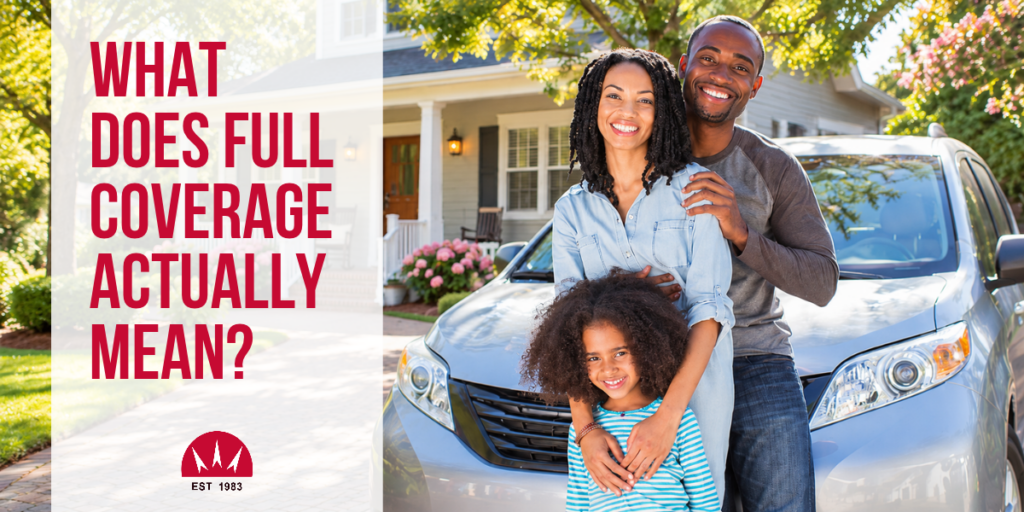
“I have full coverage.”
It’s one of those phrases people use all the time when talking about car insurance. And it sounds pretty straightforward: full coverage must mean you’re fully covered, right?
Not exactly.
Here’s the first thing every driver should know: “full coverage” isn’t actually an official type of auto insurance policy.
Ramsey Solutions explains in its What Is Full Coverage Insurance? article that “full coverage” isn’t a specific insurance product, but a common phrase generally used to describe a combination of liability, collision, and comprehensive coverage.
The National Association of Insurance Commissioners (NAIC) also explains that what your auto insurance policy covers depends on the individual types of coverage you choose. Those coverages can include liability, collision, comprehensive, uninsured or underinsured motorist coverage, and other protections depending on your state, policy, and needs.
So what does “full coverage” usually mean—and how do you know whether you actually have the protection you need?
At Sparks Insurance, we’re all about translating the insurance-eze. Let’s break it down.
What Does “Full Coverage” Car Insurance Usually Include?
When people say they have “full coverage,” they’re generally referring to a policy that includes liability, collision, and comprehensive coverage. Ramsey Solutions uses those three coverages as the basic combination commonly described as full coverage.
But the exact protection on your policy depends on the coverages you selected, your limits and deductibles, your state’s requirements, and, if your vehicle is financed or leased, your lender’s requirements.
That’s why “full coverage” is better thought of as shorthand—not a guarantee that every possible loss is covered.
What Does Liability Coverage Do?
Liability coverage helps protect you financially if you’re legally responsible for an accident that injures someone else or damages their property, subject to your policy limits.
It generally includes bodily injury liability and property damage liability, and most states require drivers to carry some amount of liability insurance.
One important thing to remember: state minimums are just that—minimums.
If you cause a serious accident and the damages exceed your policy limits, you could be responsible for the remaining amount. The NAIC recommends considering enough liability coverage to help protect yourself financially rather than looking only at the minimum required by law.
What Does Collision Coverage Do?
Collision coverage helps pay to repair or replace your vehicle after certain covered collisions, minus your deductible.
That could include hitting another vehicle, a tree, a guardrail, or another object, or your vehicle overturning.
Collision coverage generally isn’t required by state law. However, lenders and leasing companies commonly require it on vehicles that are financed or leased.
What Does Comprehensive Coverage Do?
Comprehensive coverage—sometimes called “other than collision” coverage—generally helps protect your vehicle against certain types of damage that aren’t caused by a collision.
Depending on the policy, that can include theft, vandalism, fire, hail, windstorms, falling objects, flooding, glass damage, or hitting an animal.
Like collision, comprehensive coverage typically has a deductible and may be required by a lender or leasing company even though state law generally does not require it.
Put liability, collision, and comprehensive together, and you have what many people mean when they say they have “full coverage.”
But that still doesn’t mean everything is covered.
Does “Full Coverage” Mean Everything Is Covered?
Quick answer: No.
Even if your policy includes liability, collision, and comprehensive coverage, it still has limits, deductibles, exclusions, and conditions.
Other important protections may also need to be added separately or may vary depending on your state and insurance company.
That’s why asking, “Do I have full coverage?” doesn’t tell you nearly enough about how well you’re actually protected.
What Might Not Be Included in “Full Coverage”?
Depending on your state, carrier, and policy, other coverages may include:
- Uninsured/underinsured motorist coverage, which may help when an at-fault driver has no insurance or not enough insurance.
- Medical Payments or Personal Injury Protection (PIP), which may help with certain medical expenses for you or your passengers after an accident.
- Rental reimbursement, which may help pay for a rental vehicle while your car is being repaired after a covered loss.
- Roadside assistance or towing, which may help with certain breakdowns, towing, lockouts, or other roadside situations.
- GAP or loan/lease coverage, which may help in certain situations if your vehicle is totaled and you owe more on your loan than the vehicle is worth.
Some of these coverages are required in certain states, while others are optional. The point isn’t that every driver needs every available coverage.
It’s that you shouldn’t assume something is included simply because you’ve been told you have “full coverage.”
What If My Car Is Paid Off?
Once your vehicle is paid off, a lender is no longer requiring you to carry comprehensive and collision coverage.
But that doesn’t automatically mean you should drop them.
Instead, consider what your vehicle is worth, what you’re paying for the coverage, your deductibles, and whether you could comfortably repair or replace the vehicle yourself if it were totaled or stolen.
For an older vehicle with a lower value, there may come a point when carrying comprehensive and collision deserves another look.
For another driver, losing a vehicle could create a significant financial burden.
There isn’t one right answer for everyone.
How Do I Know What My Auto Insurance Actually Covers?
Instead of asking only, “Do I have full coverage?”, ask a few more specific questions:
What are my liability limits? Do I have comprehensive and collision coverage? What are my deductibles? Do I have uninsured or underinsured motorist protection? Does my policy include rental reimbursement or roadside assistance? If I finance or lease my vehicle, am I meeting my lender’s or leasing company’s insurance requirements? Are there exclusions or limitations I should understand?
Those questions tell you much more about your protection than the words “full coverage” ever could.
Let’s Make “Full Coverage” A Little Clearer
“Full coverage” may be a convenient phrase, but auto insurance is really a combination of individual coverages, limits, deductibles, and options that work together.
And the right combination isn’t exactly the same for everyone.
A paid-off older vehicle may need a different insurance conversation than a brand-new financed SUV. Your state’s requirements matter. Your lender’s requirements matter. Your liability limits matter. And so does the amount of financial risk you’re comfortable taking on yourself.
At Sparks Insurance, we can review your current auto policy, explain what each coverage actually does in plain language, compare options from multiple insurance companies, and help you decide what protection makes sense for you.
So the next time someone asks whether you have “full coverage,” there’s a better question:
What does my auto insurance actually cover?
Contact Sparks Insurance today for an auto insurance review or quote, and let us help you protect what matters most with coverage you can trust.