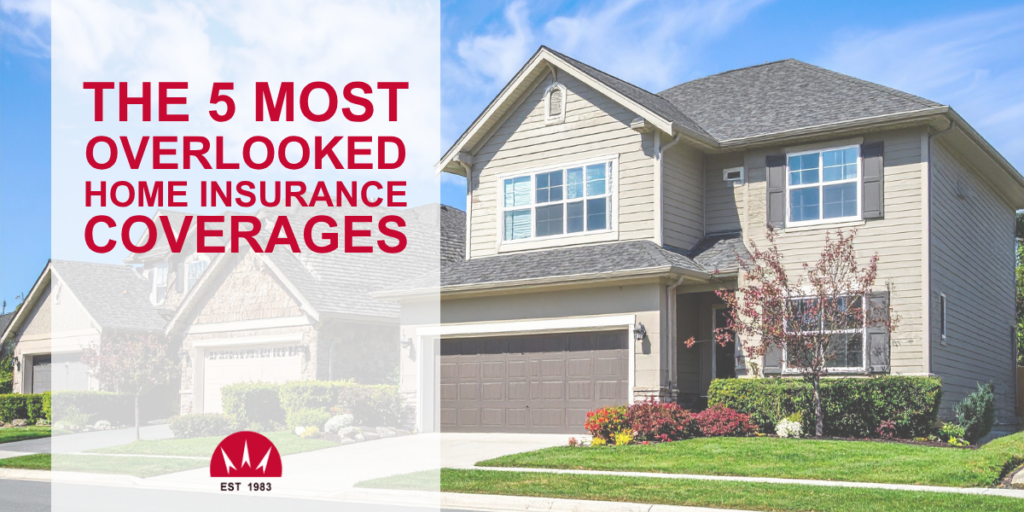
The 5 Most Overlooked Home Insurance Coverages
June 15, 2026
Homeowners insurance is one of those things you’re glad to have when you need it, but let’s be honest—most people don’t read through every line of their policy until something happens. And by then, it may be too late to find out there was a coverage gap.
At Sparks Insurance, we believe coverage should be clear, practical, and built around real life. Your home is one of your biggest investments, and the right homeowners insurance policy can help protect it from the unexpected. But some of the most helpful coverages are also the ones homeowners often overlook.
Here are five home insurance coverages worth reviewing before a claim brings them to your attention.
1. Roof Replacement Cost Coverage
Your roof is one of the most important parts of your home, but not every policy handles roof damage the same way. Many homeowners assume that if wind or hail damages their roof, insurance will simply pay to replace it. The reality depends on how your policy is written.
Some policies cover roof damage at replacement cost value, often called RCV, which means the policy may pay the cost to repair or replace the damaged roof without deducting for depreciation, subject to your deductible and policy terms. Other policies may cover the roof at actual cash value, or ACV, which factors in depreciation based on the age and condition of the roof.
That difference can matter in a big way. If your roof is older and your policy pays actual cash value, your out-of-pocket cost after a covered claim could be much higher than expected.
This is why it’s a good idea to ask a few simple questions: Is my roof covered at replacement cost or actual cash value? Do I have a separate wind or hail deductible? Are there age restrictions or exclusions I should know about?
Your roof is too important to guess about. A quick policy review can help you understand exactly what to expect before storm season rolls in.
2. Extended Dwelling Coverage
Your dwelling coverage is the part of your homeowners policy that helps pay to repair or rebuild your home after a covered loss. But here’s the catch: the cost to rebuild your home is not always the same as your home’s market value, and construction costs can change quickly.
Extended dwelling coverage, sometimes called extended replacement cost or additional replacement cost protection, can provide an extra layer of coverage if the cost to rebuild your home is higher than your dwelling limit.
Think of it this way: if your home is damaged by a covered event and construction materials or labor costs have increased, your original dwelling limit may not stretch as far as you thought. Extended dwelling coverage can help provide extra room in the policy, so you’re not left trying to cover the gap on your own.
This can be especially important after a large storm or widespread disaster, when many homeowners in the same area are trying to rebuild at the same time and demand for materials and labor goes up.
If you haven’t reviewed your dwelling limit in a while, this is a great reason to do it.
3. Service Line Coverage
You may not think much about the underground lines running to and from your home—until one of them breaks. Water lines, sewer lines, gas lines, electrical lines, and cable or internet lines can all run beneath your property. In many cases, the homeowner may be responsible for repairs to the portion of the line located on their property.
That’s where service line coverage can help.
Service line coverage, sometimes called buried utility line coverage, is an optional endorsement that may help cover the cost to repair or replace a damaged utility line running to your home. Depending on the policy, it may also help cover excavation, damaged landscaping, and related repair costs.
Without this coverage, a broken underground line can become a costly surprise. And because these lines are out of sight, they’re easy to overlook during a policy review.
If you own an older home, have large trees near your utility lines, or simply want to avoid a major out-of-pocket repair, service line coverage is worth asking about.
4. Water Backup Coverage
Water damage can be frustrating, messy, and expensive. But not all water damage is covered the same way.
Many homeowners are surprised to learn that water backing up from a sewer or drain, or water overflowing from a sump pump, may not be covered by a standard homeowners insurance policy. Water backup coverage is an optional endorsement that can help cover damage caused by sewer backups, drain backups, or sump pump overflow.
This is different from flood insurance, and it’s also different from a burst pipe. That’s why it’s important to understand what your policy does and does not cover.
Water backup coverage may be especially helpful if your home has a basement, an older plumbing system, large trees near sewer lines, or a sump pump that works hard during heavy rain.
No one wants to think about sewage or water backing up into their home, but this is one of those coverages you’ll be very glad to have if you ever need it.
5. Equipment Breakdown Coverage
Your homeowners policy may cover damage from certain sudden events, but it typically does not cover normal wear and tear or mechanical failure. That can be a problem when you think about how many expensive systems and appliances keep your home running every day.
Equipment breakdown coverage is an optional endorsement that may help cover repair or replacement costs if major home systems or appliances break down due to a covered mechanical, electrical, or pressure system failure.
This can include items like HVAC systems, furnaces, refrigerators, water heaters, washers and dryers, home security systems, well pumps, pool equipment, and even some smart home devices, depending on the policy.
It’s important to remember that equipment breakdown coverage is not the same as a home warranty, and it typically does not cover normal wear and tear, rust, corrosion, or pre-existing issues. But for sudden breakdowns, electrical failures, or certain power surge-related damage, it can provide valuable protection.
With so many homes relying on expensive appliances, electronics, and smart systems, this coverage is becoming more and more relevant.
A quick note from Sparks Insurance
Home insurance isn’t one-size-fits-all. The right policy should reflect your home, your risks, your budget, and your peace of mind.
The five coverages above are often overlooked because they may not automatically come with every homeowners policy. But they can make a big difference when it comes time to file a claim.
If you’re not sure whether your current policy includes roof replacement cost coverage, extended dwelling coverage, service line coverage, water backup coverage, or equipment breakdown coverage, Sparks Insurance is here to help.
We’ll walk through your policy with you, explain your options clearly, and help you spot any potential gaps before they become expensive surprises.
Contact Sparks Insurance today for a homeowners policy review and make sure your home is protected with coverage you can trust.